Three Brothers and a Twin at Cudi Dağı
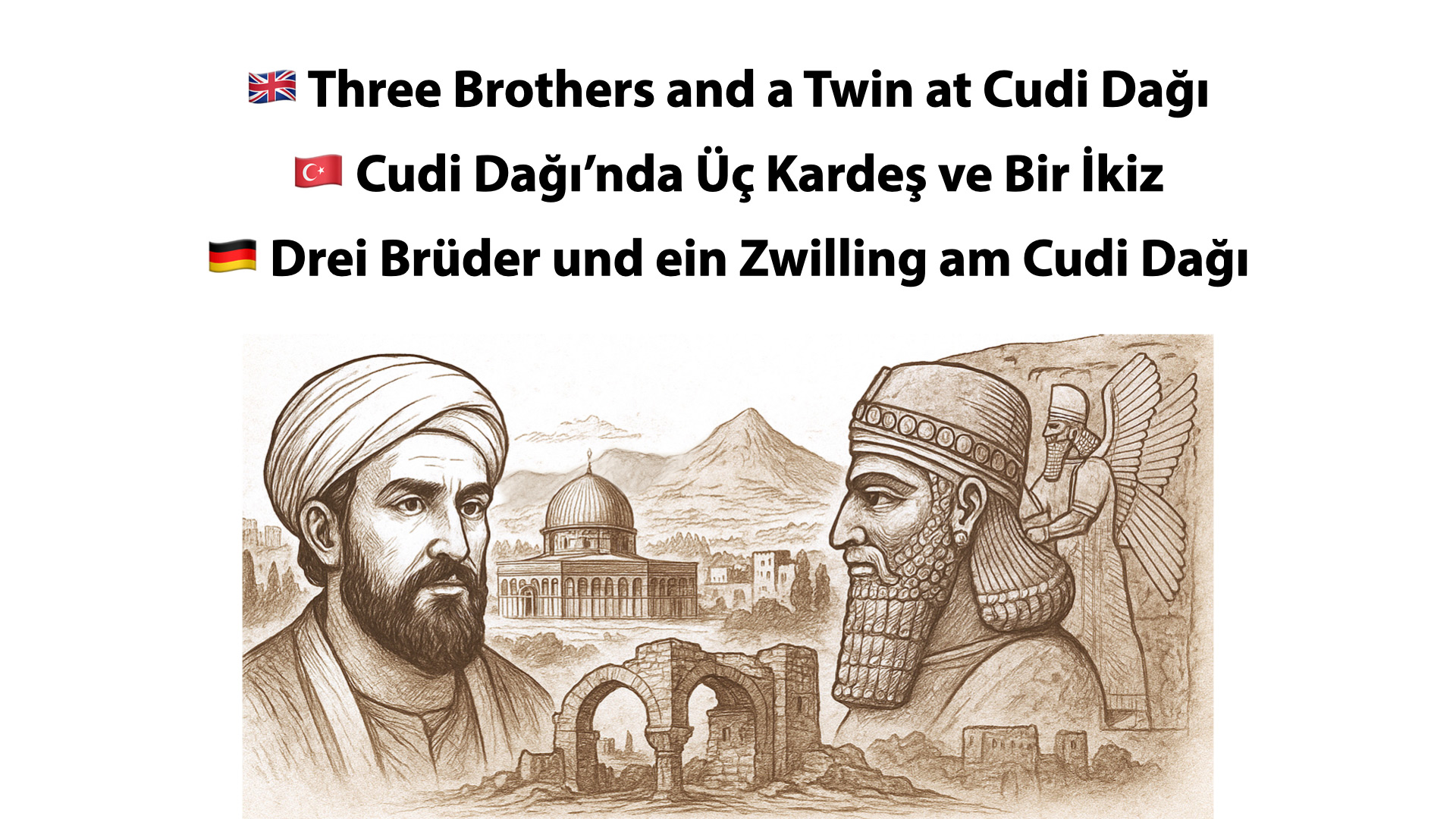
Paper by Timo Roller about Ali ibn Al-Athir and King Sennacherib: Their Lives, Perspectives, and Presence in Cizre
15. Juli 2026
You can download this paper as a chapter of the Symposium Proceedings at my Academia Account.
ABSTRACT:
Ibn al-Athīr (1160–1233) is one of the most important Muslim historians of the Middle Ages. In his famous book The Complete History (al-Kāmil fī al-Tārīkh), he describes many events—such as the Crusaders’ capture of Jerusalem in 1099. His Arabic perspective has also been received in Christian countries and, for example, is compared to the account of William of Tyre—which reflects the Crusader viewpoint—in a teaching unit developed at the University of Bonn. Although the numerical data in these accounts are subject to critical examination, the comparative study of opposing conflict narratives is of great importance for historical research. Ibn al-Athīr was born in Cizre, in today’s Şırnak Province in southeastern Türkiye. He belonged to one of the most influential families of the time and had two brothers who also gained great significance. Most of his life, however, Ibn al-Athīr spent in the city of Mosul, where he also died.
Long before Ibn al-Athīr—almost 1,800 years earlier—another famous figure lived in the same region: the Assyrian king Sennacherib, whose military campaigns—especially those against Jerusalem—are documented in inscriptions and reliefs. Again, scholars are presented with divergent narrative traditions: biblical accounts on one hand, and Assyrian royal annals on the other. Here too, reported casualty figures are critically examined. Rock reliefs near Cizre (in the archaeological sites of Şah and Hassana) attest to Sennacherib’s presence in the region around Cudi Dağı, possibly in the context of early reverence for the mountain as the landing site of Noah’s Ark. The capital of the Assyrian Empire during his reign was Nineveh, the ruins of which lie within the modern city of Mosul.
This lecture introduces Ibn al-Athīr and Sennacherib as historical "twins"—connected through famous places, fascinating narratives of conquests, and spheres of religious significance. By comparing their perspectives on Jerusalem, Nineveh, and Cizre, the presentation offers a panoramic view spanning three millennia of history in the Fertile Crescent.
Timo Roller is author of the book »Das Rätsel der Arche Noah« and www.bibelabenteurer.de
FULL PAPER as published in: »IBNÜ’L-ESÎR EL-CEZERÎ KARDEŞLER« (»The Historical Witness of the Three Brothers from Cizre«)
DOI Number https://doi.org/10.58830/ozgur.pub1283My lecture presents ʿAlī ibn al-Athīr and Sennacherib as cultural “twins”—linked through places, conquest narratives, and spheres of historical as well as religious significance. By comparing their perspectives on the cities of Jerusalem, Mosul/Nineveh, and Cizre, a panorama unfolds that spans three millennia of history in the Fertile Crescent.
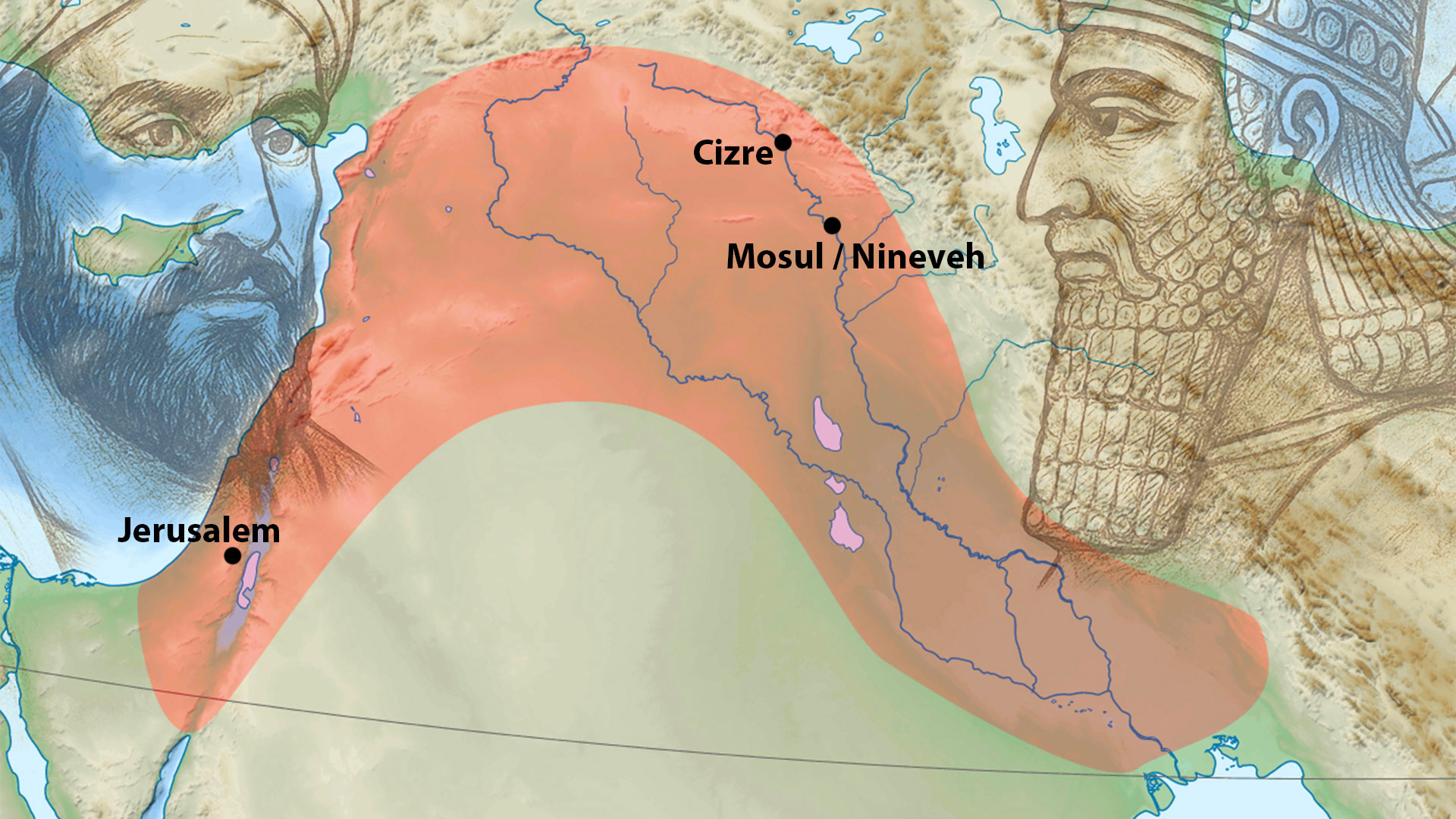
ʿAlī ibn al-Athīr is regarded as the most significant Muslim historian of the High Middle Ages. In his monumental chronicle al-Kāmil fī al-Tārīkh (“The Complete History”), he describes—among other events—the siege and conquest of Jerusalem by the Crusaders in 1099. His account provides one of the most detailed Muslim perspectives on the First Crusade and has remained an important source for both Islamic and Western historiography. In the very same region, nearly 1,800 years before Ibn al-Athīr lived Sennacherib, the great Assyrian king. His military campaigns—above all those against Jerusalem, but also expeditions toward Mount Cudi—are recorded in inscriptions and monumental reliefs. These testimonies allow us to gather additional information about events described in the Bible.
The FIRST city that connects our two “twins” is JERUSALEM
1.1 The significance of Jerusalem
There are sacred places in this world that are meaningful to believers of different religions. One of them is Mount Cudi Dağı, right here in your region. As a Christian, it is a great honor and privilege for me to be here again after twelve years.
But another famous place has long held a central role for many religions: Jerusalem.
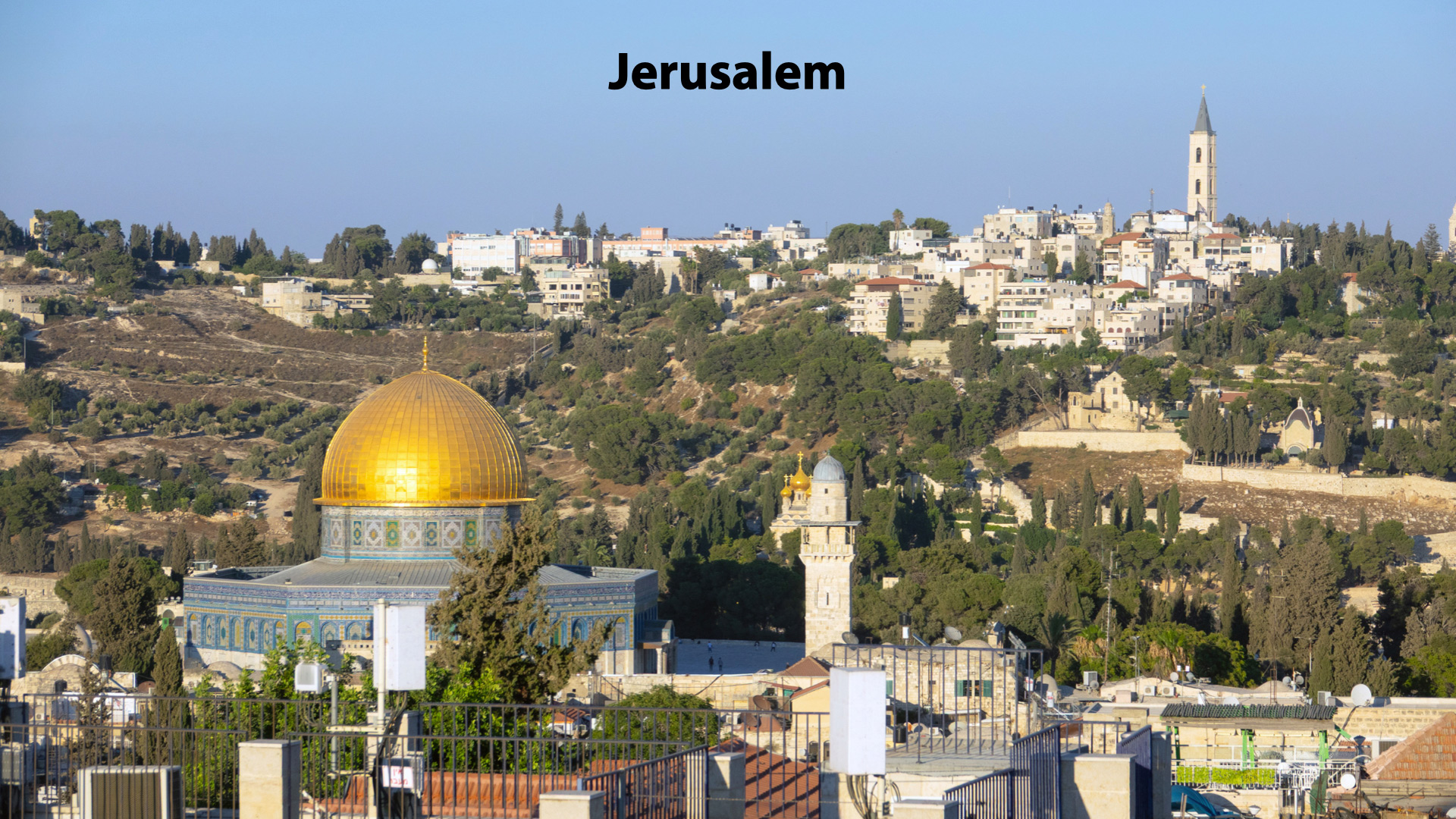
Bahāʾ ad-Dīn, a contemporary of Ibn al-Athīr, gives us a vivid glimpse into the importance of Jerusalem during the time of the Third Crusade. He quotes a letter from the Crusader king Richard the Lionheart to Sultan Saladin: “Jerusalem is for us a matter of faith, and we could never renounce it.” Saladin, in reply, wrote: “Jerusalem belongs to us no less than to you. In fact, it is even more sacred to us than to you.”
These are the Christian and Muslim perspectives of that time. The Jewish view is expressed in the words of Psalm 137: “If I forget you, O Jerusalem, let my right hand forget its skill! Let my tongue stick to the roof of my mouth, if I do not remember you, if I do not set Jerusalem above my highest joy!”
1.2 Diverging Perspectives on the Conquest of 1099
Two of these accounts of the conquest of Jerusalem were written during the time of the Ibn al-Athīr brothers in the twelfth and thirteenth centuries. ʿIzz al-Dīn ibn al-Athīr, also known as ʿAlī ibn al-Athīr, was born in Cizre in 1160 and died in Mosul in 1233.
The Crusades have remained in collective memory as an era of violence and interreligious conflict. In many battles of the Middle Ages, immense bloodshed took place—including in Jerusalem. The conquest of the Holy City in 1099 was not unique in itself, yet it has been remembered with particular intensity and has inscribed itself, in different ways, into the memories of both the Muslim and the Christian worlds.
From the West we have chronicles written from a Christian perspective, but through Ibn al-Athīr, available today in translation, we also gain access to a distinctly Muslim and Arabic view of the events. This is invaluable for multiperspectival approaches to history and for interreligious and intercultural dialogue. Indeed, a teaching project developed at the University of Bonn for advanced secondary school classes sets the two accounts side by side: the Christian version by William of Tyre and the Muslim account by Ibn al-Athīr. Both report a terrible massacre and the unrestrained slaughter committed by the Crusaders.
Ibn al-Athīr speaks of many victims, yet he also notes that there were acts of mercy. He writes: “A group of them sought protection in the House of David, fortified it and resisted for some days. After the Franks had guaranteed them safety, they surrendered; the Franks kept their word, and they departed at night toward Ascalon …” Later he adds about these survivors: “They were in tears and moved others to tears when they told of what the Muslims had suffered in that exalted and holy city.”
William of Tyre, in contrast, reports the same events in a completely different tone, emphasizing that the massacre had “restored order” in the city. According to him, the conquerors entered the Christian holy sites “with hymns and songs.”
Both perspectives require careful comparison and critical analysis. The death tolls are very likely exaggerated. After other medieval conquests and massacres, it is clear that far fewer people lived in Jerusalem at the time. Some inhabitants also survived, as the testimony of refugees confirms. Instead of the 70,000 reported by Ibn al-Athīr, the number of victims was probably closer to 10,000—still a horrific tragedy. William, too, may have exaggerated, drawing on biblical language from the Book of Revelation and the Books of the Maccabees to magnify the glory of the conquest.
1.3 A Multiperspectival View on the Siege of 701 BCE
Turning now to the “twin”: King Sennacherib of Assyria. He reports on a similar attack against Jerusalem—this time in 701 BCE, and from the Assyrian perspective. In the Old Testament we encounter the opposing viewpoint, from within the besieged city itself: Sennacherib’s campaign fails, and the Assyrian army is struck down by an angel of God. Here again, however, the casualty figures appear vastly inflated. The biblical text speaks of 185,000 dead, yet it is more likely that the original number referred to 185 military units, which were later mistranslated as “thousands”:
“That night the angel of the Lord went out and struck down 185,000 in the camp of the Assyrians. And when people arose early in the morning, behold, these were all dead bodies. Then Sennacherib king of Assyria departed and went home and lived at Nineveh.” (2 Kings 19:35–36).
Sennacherib’s own reliefs, unearthed in the territory of present-day Iraq beginning in 1847, confront us with the Assyrian version of the biblical narrative in detailed images. On a six-sided clay prism—the so-called Sennacherib Prism—the Assyrian account of the “third campaign” is preserved in cuneiform. Here Hezekiah is said to have been “enclosed”, and the conquest of forty-six fortified cities, including Lachish, is proudly listed. Unsurprisingly, there is no mention of defeat; such an admission would hardly be what an Assyrian world ruler wished to pass on to posterity.
“…Like a caged bird I enclosed Hezekiah of Judah within Jerusalem, his royal city.”
The Bible, by contrast, tells us that after Sennacherib was later assassinated by his own sons, they fled “to the land of Ararat.” In later translations this was rendered as “Kardu”—the very mountain range known today as Cudi Dağı.
Although the biblical account might suggest that this happened immediately after the campaign against Jerusalem, it actually occurred many years later. Sennacherib still had time to adorn his palace with monumental reliefs about his campaigns, some more of which we will turn to shortly.
1.4 Can Understanding Different Perspectives Contribute to Peace?
Jerusalem—a holy place for many faiths, marked by conflict over millennia, and still today. In the Old Testament we read: “Behold, I am about to make Jerusalem a cup of staggering to all the surrounding peoples. The siege of Jerusalem will also be against Judah. On that day I will make Jerusalem a heavy stone for all the peoples.” (Zechariah 12:2–3).
In the New Testament, Jesus Christ weeps over the city: “And when he drew near and saw the city, he wept over it, saying, Would that you, even you, had known on this day the things that make for peace!” (Luke 19:41–42).
To this very day Jerusalem has not found peace. Perhaps a multiperspectival understanding can contribute to opening pathways toward reconciliation.
The teaching project at the University of Bonn connects the medieval sources with an interview given by Philippe Buc (*1961), a French-American historian now at Leiden University. Buc emphasizes the importance of considering the role of violence in that period from multiple perspectives and of drawing lessons from it: “Politicians as well as citizens are thus better able to understand terror in this tradition, and in this way to contain it more effectively.”
Learning from the past, in my conviction, should lead us to extend our hands to one another and to renounce violence. As a Christian, I am guided by the words of Jesus Christ in the Sermon on the Mount: “Blessed are the peacemakers, for they shall be called sons of God.” (Matthew 5:9)
Believers of other faiths will surely know similar words that call for peace—words that can inspire us to build a better future together.
The SECOND City is MOSUL — once called NINEVEH
2.1 Mosul Today
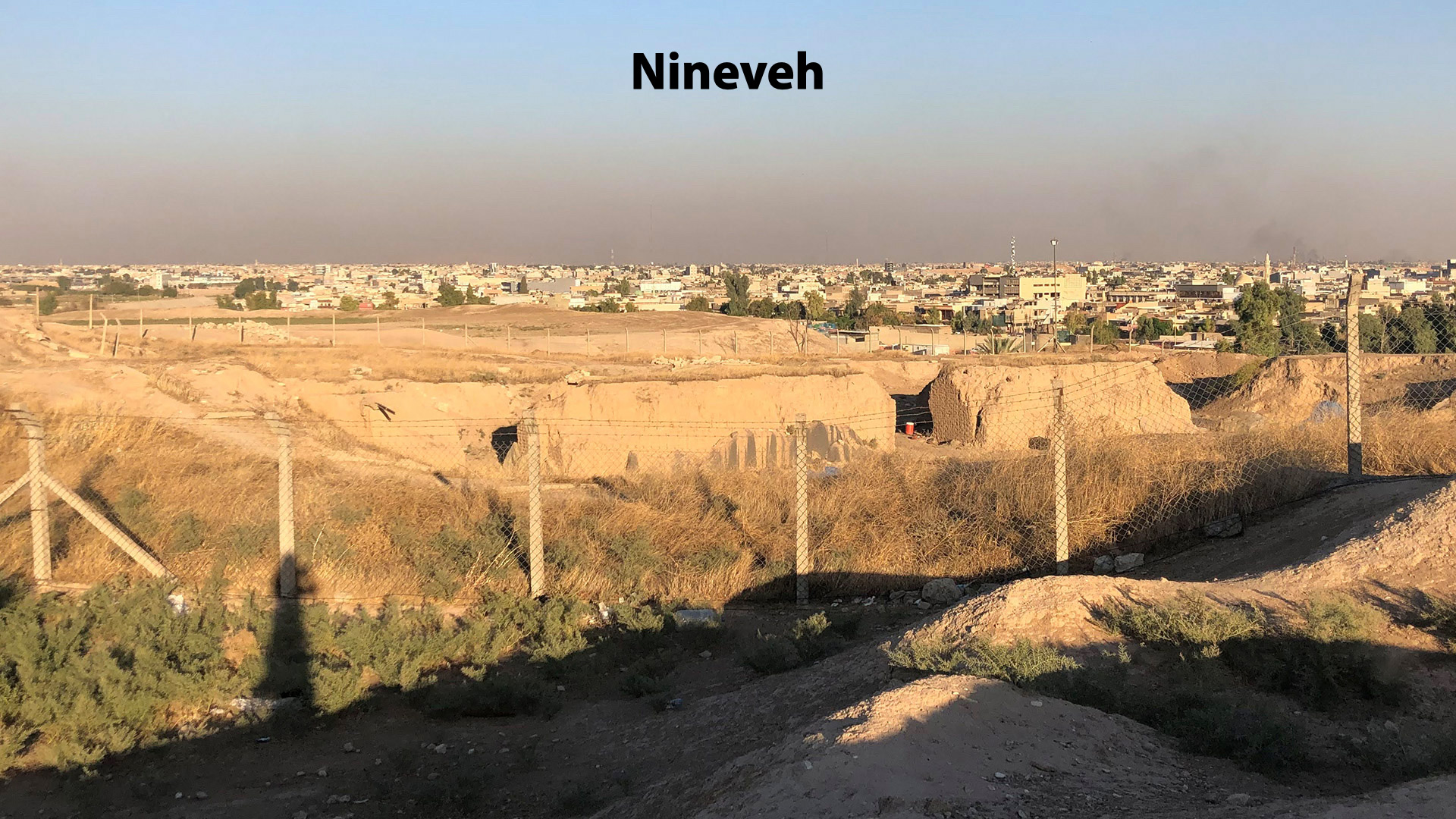
Mosul is today the second-largest city in Iraq, with a population of nearly three million. It lies on the banks of the Tigris River and surrounds the ancient city of Nineveh, whose ruins are in part overbuilt by the modern metropolis. In recent decades Mosul has repeatedly been in the headlines—most notably in 2003 during the Iraq War, and again in 2014 when the so-called “Islamic State” (“ISIS”) seized control of the city. In the Battle of Mosul of 2016–2017, this strategically important urban center was recaptured.
In recent years, UNESCO has invested heavily in reconstruction. Among the projects is the rebuilding of the destroyed Great Mosque of al-Nuri, dating back to the time of the Ibn al-Athīr brothers.
Mosul remains a city of remarkable cultural diversity: while the majority of its inhabitants are Arabs, it is also home to Assyrians, Kurds, Turkmens, Yazidis, and other groups.
2.2 The (Mythical) Origins of Nineveh
Nineveh was one of the most important cities of Assyria. In biblical tradition, the great city-builder Nimrod is said to have founded Nineveh. According to Assyrian legends, however, the city was established by the goddess Ishtar. Archaeological excavations reveal settlement traces going back to the Neolithic period. For centuries, Nineveh and Assur were the principal cities of Assyria, “each surrounded by a particular sacred aura, which gave it an outstanding significance for the Assyrian world.”
Nineveh is also well known through the story of the prophet Jonah. For the city, this was a time of upheaval and decline. Until 2014, Mosul still preserved a monument to this memory: the Prophet Jonah Mosque, which was destroyed in that year. Today it, too, is under restoration.
2.3 The Golden Age of Nineveh under Sennacherib
Sennacherib reigned from 704 to 681 BCE and made Nineveh the capital of Assyria. He and his successors built imposing palaces there, richly decorated with reliefs and accompanied by large collections of cuneiform tablets. In his annals and on carved stone reliefs we find, as mentioned earlier, accounts of his campaigns like the conquest of Judean cities and the siege of Jerusalem. But we also encounter a reference to his campaign toward Mount Cudi. On one of these reliefs, his face was deliberately defaced after his reign—a striking reminder of the vulnerability even of the mightiest kings.
2.4 The Significance of Mosul in the Time of Ibn al-Athīr
Many centuries later, in the twelfth and thirteenth centuries, ʿAlī ibn al-Athīr lived in the same city, now known as Mosul. By that time the ruins of Nineveh had long faded, yet the vicinity to the ancient royal city was still tangible. Mosul had become an important center of the Zengid realm, a hub of politics, trade, and culture. For Ibn al-Athīr it was both his place of residence and the city where he composed his monumental world chronicle—and where he ultimately died.
In this way, Sennacherib and Ibn al-Athīr are also connected through this city, almost as mirror images: the one as a king and builder, the other as a historian and chronicler.
The THIRD City is CIZRE – the Reason for this Symposium
3.1 Cudi Dağı: A Pilgrimage Site for many Religions
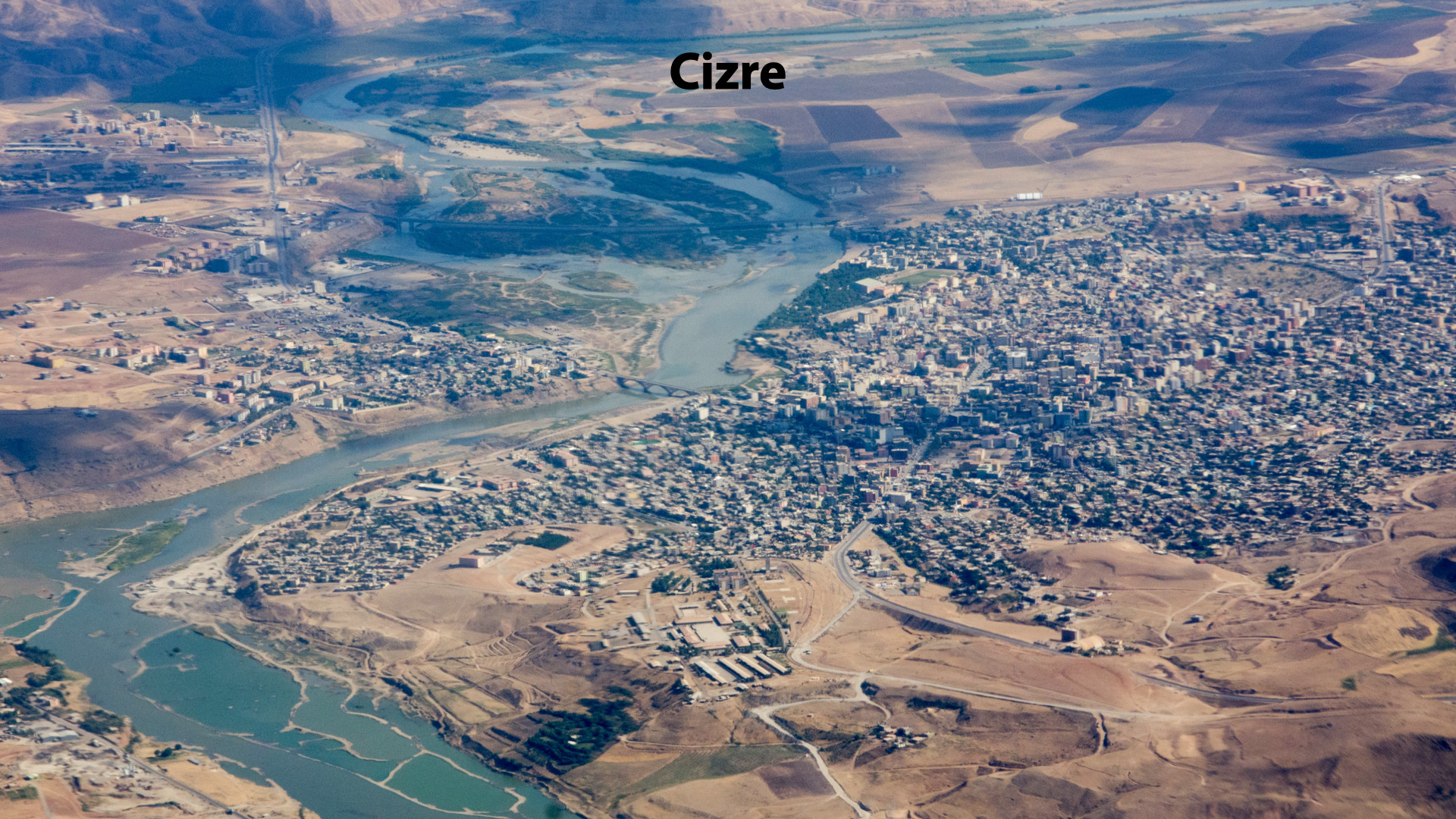
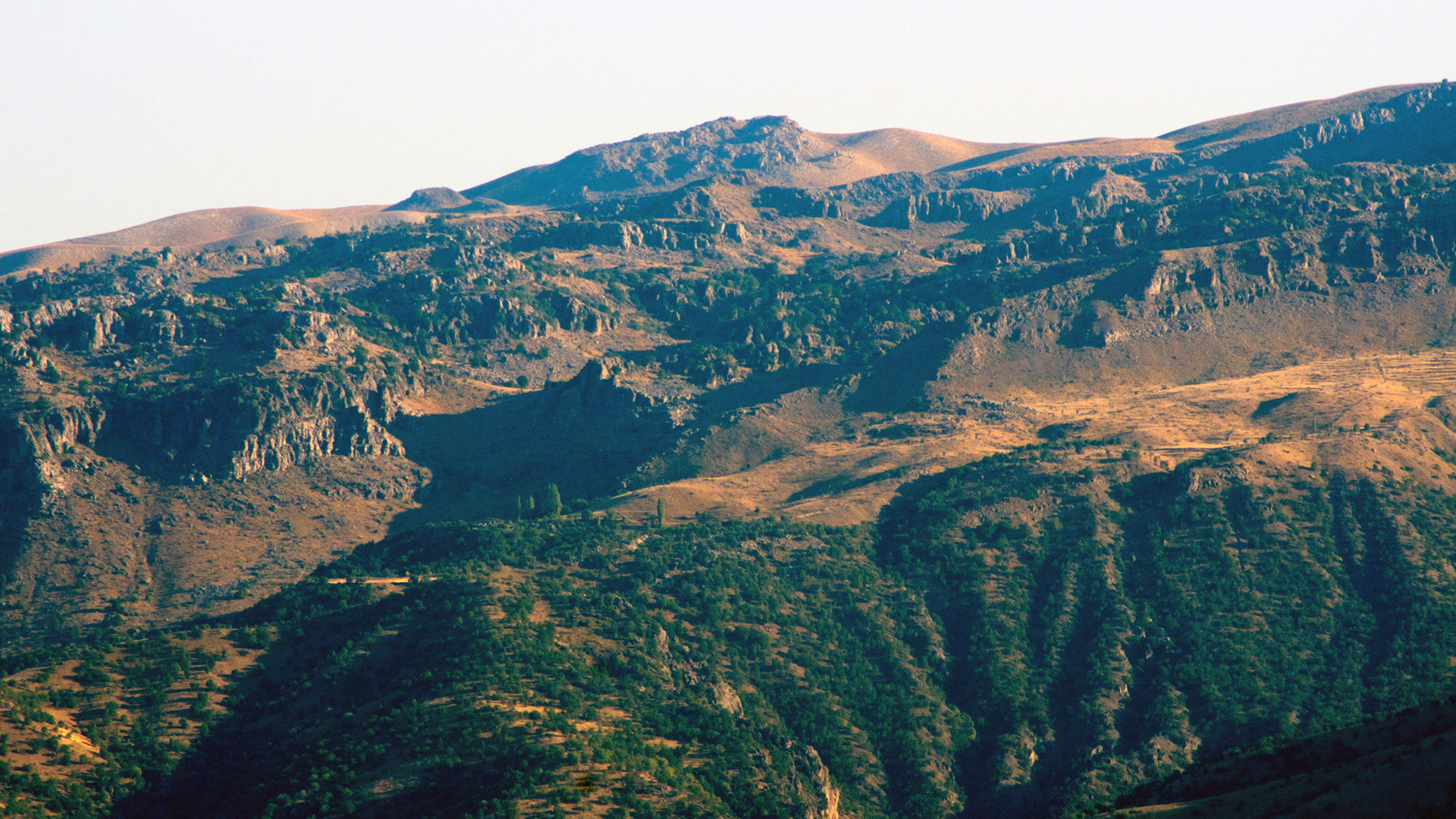
Cizre was the birthplace of the Ibn al-Athīr brothers, who became some of the city’s most famous figures—renowned, as I have shown, even at universities in the Christian West. In preparing for this symposium, I have learned much about them and about their time. Cizre lies only a few kilometers from several impressive rock reliefs of King Sennacherib, carved into the slopes of Mount Cudi. And within sight as well is Sefine, the landing place of Noah’s Ark!
ʿAlī ibn al-Athīr does not explicitly mention that the Ark came to rest near his hometown, yet he was certainly familiar with the Qurʾānic traditions. Throughout the centuries, Cizre and Mount Cudi have remained an important site of pilgrimage.
His contemporaries—such as al-Masʿūdī—reported that in their time remnants of the Ark were still visible.
3.2 The Glorification by Sennacherib
Many centuries earlier, Sennacherib had been here. At the Symposia of 2013 and 2021 at the University of Şırnak, we learned much about this. His fifth campaign brought him to Mount Cudi, which he called Nipur. In his annals Sennacherib recorded:
“My fifth campaign led [to] the summit of Mount Nipur, a steep mountain. I pitched my camp at the foot of Nipur, and with my chosen bodyguard and my relentless warriors I advanced against them like a strong wild bull […] I pursued them to the tops of the mountains and achieved victory over them. I captured their cities and carried off spoil. I destroyed, I devastated, I burned everything with fire.”
An ancient Jewish legend tells us: “On his return to Assyria, Sennacherib found a wooden plank, which he worshipped as an idol, for it was part of the Ark with which Noah had been saved from the Flood.”
This mountain was of great importance to Sennacherib. He had several rock reliefs carved here, at Sah and at Hassana. In my own research I have also examined the depictions of the fifth campaign on the reliefs in Nineveh.
In recent months I have investigated the orientation of Sennacherib’s pointing finger on the various reliefs. My study suggests that the finger is, with high probability, directed toward the landing place of Noah’s Ark (Sefine)—a striking expression of his veneration for the site.
These and other findings indicate that the Ark’s landing place was not only of great importance for Islam, Christianity, and Judaism, but already held special significance in Assyrian times, and perhaps even for the earlier Hurrians.
3.3 The Holy Ark Mountain and My Hope for Peace and Shared Pilgrimage
For centuries, Mount Cudi has been a sacred place for believers of different religions. Then came times of conflict, war, and terror. These times now seem to be overcome, and I was fascinated to see the pictures and video clips of the Cudi Festival held in July.
Here people gather; here a mosque is being built. For the local population, Sefine has once again come into view as a holy place—just as it has been for more than 2,700 years. Prof. Dr. Ali Erbaş, the then-President of the Turkish Directorate of Religious Affairs, has declared: Sefine is almost as significant as Mecca.
As a Christian from Germany, I am deeply grateful to join the symposium and to have the opportunity to address the audience. I hope that through my paper I have been able to highlight the fascinating connection between the two “cultural twins,” Ibn al-Athīr and Sennacherib, and to present some intriguing perspectives on the history of three cities. Perhaps the third city—Cizre with Mount Cudi—may become a place of shared pilgrimage, of peace, and of mutual understanding. The landing of the Ark after the Flood and peace among humankind are marked by a common symbol: the dove. And the organizers of the Cudi Festivals, too, have released doves into the sky.
It is a great honor for me to visit this place and to join, in a sense, the pilgrims of millennia. At the last Cudi Symposium, I gave a lecture about the pilgrims of Noah—please feel free to watch it, if you are interested.
Among Christians in Europe, Mount Cudi is not yet widely known, but awareness is steadily growing. As a result of my research, the Cudi Mountain has even been added as an alternative to Mount Ararat (Ağrı Dağı) in the Bible translation of the Catholic Church.
Sources:
Ibrahim Baz: »Cudi Dağı’nda Kadim Bir Mesken: Sah Köyü«; in: »Hz. Nuh ve Cudi Dağı Sempozyum Bildirileri«, 2014, Şırnak
Die Bibel: 2. Könige 19,35–36; Sacharja 12,2+3; Lukas 19,41-42; Matthäus 5,9
Universität Bonn: »Religion und Gewalt: die Eroberung Jerusalems durch die Kreuzfahrer (1099)«, https://www.igw.uni-bonn.de/medien/medienordner-abtl-geschichtsdidaktik/qvid/mittelalter/unterrichtsentwuerfe/jerusalem-1099.pdf
Bill Crouse: »Sennacherib’s Fifth Campaign To The Cizre Plain«; in: »Nuh Tufani ve Cudi Dağı Sempozyum Bildirileri«, 2021, Şırnak
Bill Crouse: »Geographical and historical concerns in Genesis 8:4–part 2«; in: Journal of Creation 39(1) 2025
Francesco Gabrieli: »Die Kreuzzüge aus arabischer Sicht«, 1976, München
Paolo Matthiae: »Ninive – Glanzvolle Hauptstadt Asyriens«, 1999, München
Simon Sebag Montefiore: »Jerusalem – die Biografie«, 2024, Stuttgart
Timo Roller: »Das Rätsel der Arche Noah«, 2014, Witten
Timo Roller: »Gottes Axt und Noahs Planke«, https://www.bibelabenteurer.de/html/121212_sanherib_de.html
Timo Roller: »Bible Earth«, 2007, Holzgerlingen
Timo Roller: »Pilgrims to Noah«; in: »Nuh Tufani ve Cudi Dağı Sempozyum Bildirileri«, 2021, Şırnak
Timo Roller: »Presentation at the 2nd Noah Symposium«, https://www.bibelabenteurer.de/html/210605_timo_roller_en.html
Peter van der Veen: »Die biblische Geschichte des Sanherib: Nur eine Fiktion?«, https://scilogs.spektrum.de/archaeologische-spatenstiche/die-biblische-geschichte-des-sanherib-nur-eine-fiktion/